
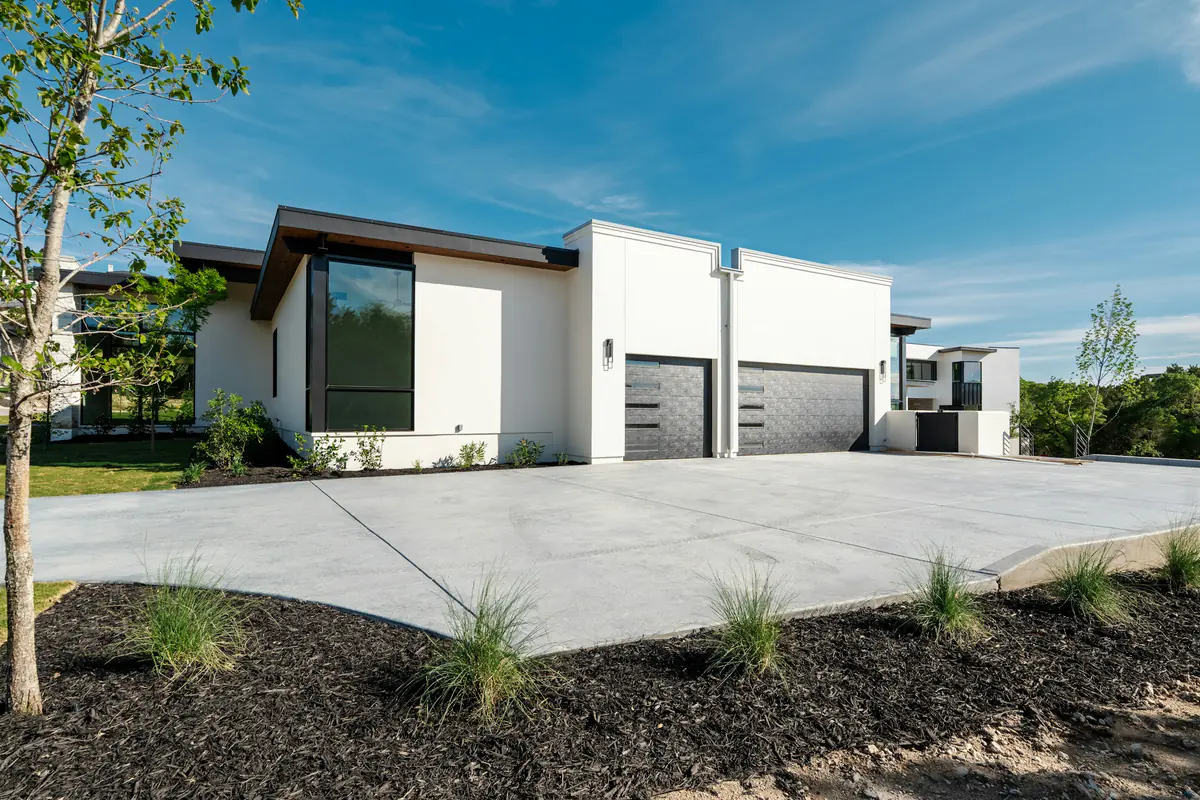
Division 01 · Concrete Flat Work
Concrete flat work for Colorado ground.
Driveways, patios, walkways, pool decks, sidewalks, dock aprons and building pads. New concrete placed, finished and jointed, for homes on one side of the division and commercial property on the other.
The term
Flat work is
the horizontal trade.
Flat work means concrete placed and finished as a horizontal surface: anything you walk on, park on or drive across. Walls, steps and structural columns are a separate discipline with different formwork and different tolerances. Flat work lives or dies on four things: flatness, drainage, how the surface wears and where it cracks.
That sounds narrow. It isn't. The same trade covers a stamped patio behind a house in Castle Rock and a load-bearing warehouse slab that takes forklift traffic every working day, and the decisions that make each one last are largely the same decisions made at different scales.
We split the division in two because the buyers are different, the sequencing is different and the finish priorities are different. So pick the side that matches your project.
 01
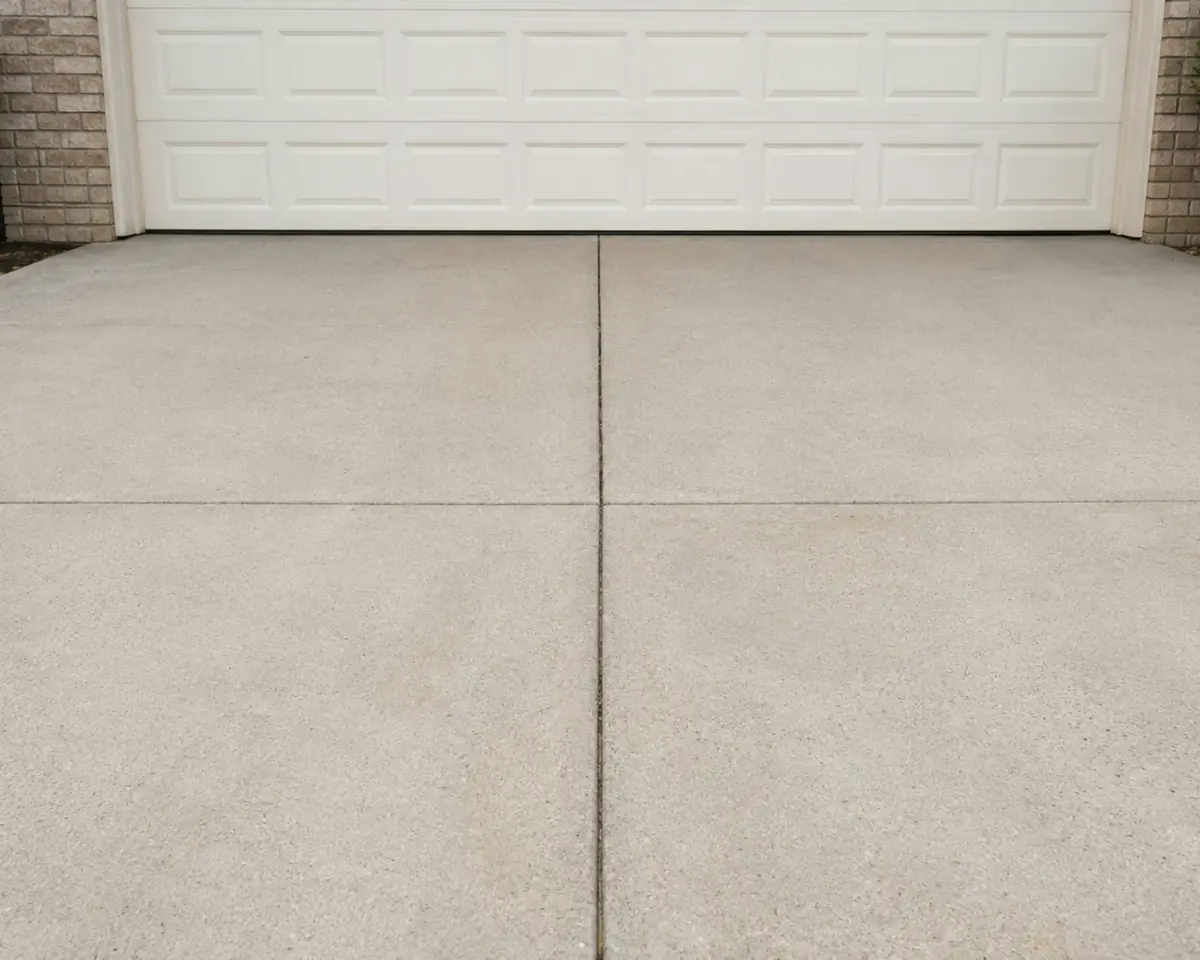
Residential
Stamped and decorative concrete for driveways, patios, walkways, pool decks, entries, courtyards and outdoor fireplaces. Residential flat work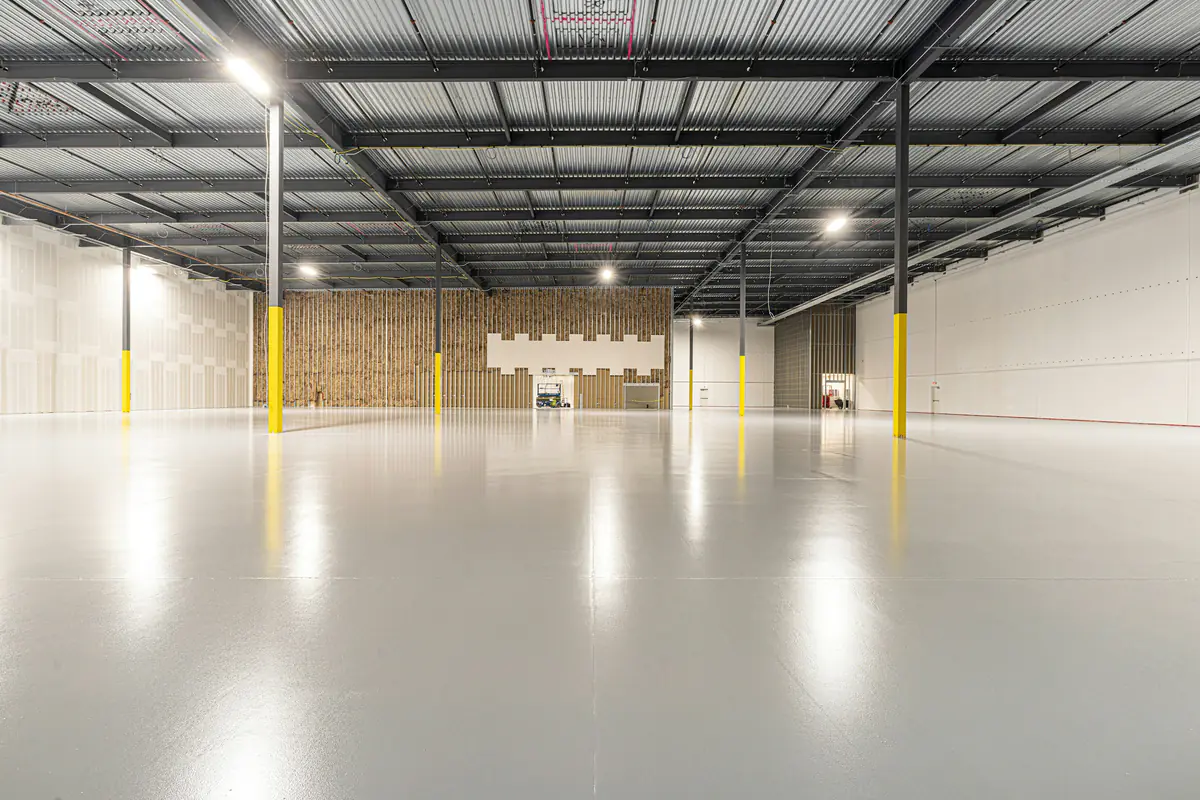 02
Commercial
Warehouse floors, loading docks, building pads, parking lots, sidewalks and resurfacing for retail, municipal and industrial sites. Commercial flat workSpecification
Six things decide
how long a slab lasts.
None of them show once the crew drives away, which is exactly why a cheap quote quietly trims them. Read them in order, because that's the order they happen in.
Subbase and compaction
A slab is only as stable as the ground under it: loose fill settles, and the concrete bridges the void until it breaks. Along the Front Range the added problem is expansive clay, which swells when it takes on water and shrinks again as it dries, moving whatever sits on top of it.
Thickness
The load decides the thickness. A garden path and a slab that takes delivery trucks aren't the same pour, and thickening one without thickening the base beneath it buys very little.
Reinforcement
Bar, welded wire and fibre don't stop concrete cracking. What they do is hold the two sides of a crack together so it stays tight and stays level, instead of opening into a lip you can catch a toe or a wheel on.
Air entrainment
Air-entrained concrete carries microscopic bubbles that give freezing water somewhere to expand into. On exterior flat work in a freeze-thaw climate it's the single clearest difference between a surface that stays intact and one that pits and flakes.
Joint layout and timing
Control joints are deliberate weak lines that tell the slab where to crack. We lay them out to suit the shape of the pour, cut them deep enough to work, and cut them early. Wait too long and the concrete picks its own line first.
Curing, then sealing
Concrete hardens through a chemical reaction with water, so the first days are about holding that water in while dry mountain air tries to pull it out. Sealing comes later, and it's what keeps de-icing salts and moisture out of the surface afterwards.
We decide every one of these before the truck arrives. Once concrete is on the ground, the only thing left to change is the finish. So ask for the base depth, the slab thickness and the joint plan in writing at quote stage, from us and from anyone else you're pricing against.

Straight answer
Cracking is managed, not prevented.
Concrete shrinks slightly as it cures and keeps moving with temperature for the rest of its life. Restrain that movement, which every slab does, and tension builds until something gives. Any contractor who promises you a driveway that will never crack is either new to the trade or not being straight with you.
What a good pour does is choose the location. Joints put the cracks in straight lines you expect, reinforcement keeps them tight, and a properly compacted base stops them stepping out of level. The result is a surface that ages instead of failing.
- Shrinkage cracking is a property of the material, not a defect in the work
- Joints direct cracking to a planned line
- Reinforcement keeps a crack tight and level instead of letting it open
- Structural cracking usually traces back to the ground, not the concrete
Care
What you do in
the first winter shows.
A slab you clear sensibly and re-seal on schedule keeps its edges and its colour for a long time; one that takes rock salt and a steel blade every January starts to pit inside a few seasons.
Nothing here takes much effort. Concrete keeps gaining strength for weeks after the finishers walk off it, and the first month is when careless habits do the most damage. Point irrigation and downspouts away from the fresh edge, keep anything sharp from dragging across the surface, and go easy on the new work through its first season. And most of what follows costs nothing at all.
The first month
Fresh concrete holds a lot of water for weeks and keeps curing long after the surface feels hard to the hand. Keep vehicles off until the contractor gives you the all-clear, and let the subgrade settle before you load the edges.
De-icers
Rock salt is hard on young concrete. It doesn't attack the paste so much as drive extra freeze-thaw cycles, melting water into the surface pores so it can freeze there again. Deicers built on ammonium nitrate or ammonium sulphate, including lawn fertiliser pressed into service as ice-melt, attack concrete directly. Sand gives you traction and does none of that.
Snow and shovels
A steel blade dropped straight onto a stamped or broomed surface chips joint edges and the high points of the texture. Fit a shoe or a poly edge, and clear snow before traffic packs it down into ice.
Sealer
Sealer is a wear layer, not a permanent coat. Sun and traffic thin it, so exterior flat work wants a re-coat every few years, and stamped work wants it sooner than broom finish because the sealer carries the colour depth. Wash the slab, let it dry all the way through, then re-coat on a dry day out of direct heat.
Finish
Grey is a choice,
not a default.
Stamped concrete can carry the pattern and colour of brick, flagstone, slate, timber plank or cut ashlar, on a surface that's still one continuous slab underneath. Colour comes from integral pigment through the mix and from release tones worked into the face, so it reads as depth, not as paint sitting on top.
We offer one-on-one consultation for layout and colour selection, or we give you the detail and let you decide in your own time. Either way you look at physical samples before we order anything, because screens misrepresent both tone and texture.
- Brick and cobblestone: running bond, herringbone, cobble
- Flagstone and slate: irregular natural stone patterns
- Wood plank: the look of decking without the upkeep
- Ashlar and tile: geometric, sharp-lined, contemporary

Next step
Tell us the area and the load.
Rough dimensions, what will drive or stand on it, and a photograph of the site if you've got one. That's enough for us to come back with a straight answer on scope and price.