

About Final Phase Concrete
A concrete company based in Castle Rock.
We place new concrete and we treat concrete that already exists. Flat work on one side, coatings and polishing on the other, for homes and businesses across Colorado.
The short version
What the company
actually does.
Final Phase Concrete puts commercial-grade floor coatings and polished concrete finishes into homes and businesses, and we place decorative flat work outdoors. A garage floor gets the same surface preparation and the same product line as a warehouse floor. The difference between those two jobs is scale and scheduling, not standard.
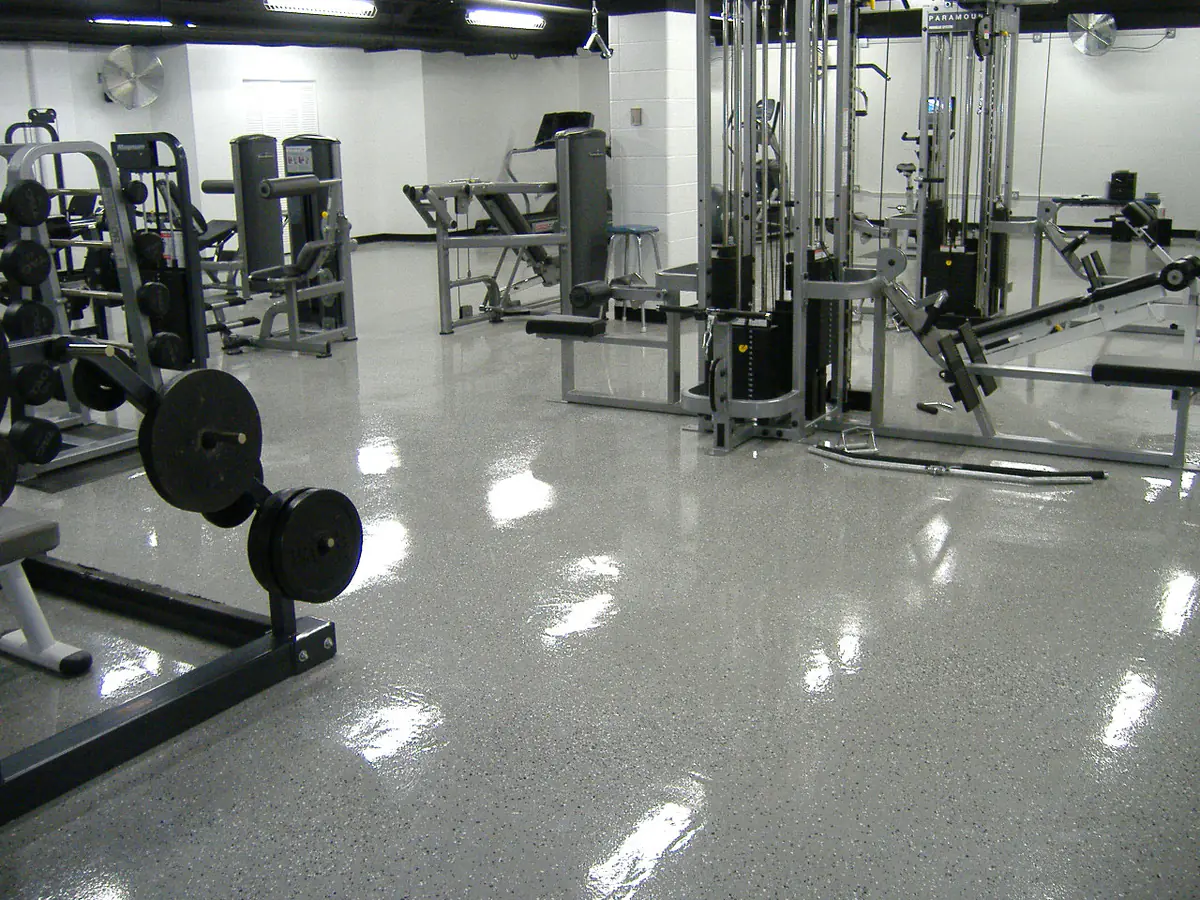
We refresh the floors of homes, gyms, sports stadiums, warehouses, stores and dealerships. Every system we install comes in a range of colours, and we pride ourselves on tailoring the product to the room instead of laying whatever is quickest. Small jobs matter to us as much as large ones, and we say that because it changes how we quote: a single garage gets a site visit too.
Warranty coverage on our coating work is warranty terms.
Structure
Two divisions,
one company.
Flat work and coatings are separate trades with separate tools. We run both, which is why we can tell you when a slab needs replacing instead of resurfacing.
| Criterion | Flat work | Coatings |
|---|---|---|
| What it is | New concrete placed and finished on site | A finish applied to concrete that is already down |
| Typical surfaces | Driveways, patios, walkways, pool decks, slabs | Garage, gym, warehouse, retail and interior floors |
| Decorative options | Stamped patterns, integral colour, stone work | Flake blends, aggregate texture, gloss level |
| Read more | Flat work | Coatings |
Running both sides changes the advice you get. An outfit that only sells coatings has exactly one product to offer, so a marginal slab tends to look coatable to them, and a crew that only pours concrete carries the opposite bias into the same driveway. We'd sooner look at a floor and name which of the two it genuinely needs, even on the days when the honest answer is the smaller invoice.
Systems
Four coating systems, plus the flat work.
Each of these behaves differently under traffic, water and temperature. Epoxy is hard and chemical resistant. Polished concrete uses the slab itself as the wearing surface, so there's no film on top that can peel. Pebbletone and rubber both trade some hardness for grip, which is exactly what you want on a wet deck.
- Epoxy coatings: we install Rock-Tred polymer coating solutions, a system first created in 1939, for commercial and residential floors
- Concrete polishing: mechanical grinding and refinement to a durable, easy-to-maintain, mirror-like finish
- Pebbletone: a decorative aggregate system that's slip-resistant and weather-resistant, suited to pool decks, patios and walkways
- Rubber coatings: polymer resin combined with rubber, non-slip and soft underfoot, over almost any solid interior or exterior surface
Choosing between them
The surface picks
the system.
Four systems sounds like four opinions. In practice the slab, the water and the traffic narrow the list down long before anyone opens a colour chart.
01
Where the water goes
Anything that stays wet wants texture underfoot. Pool surrounds, entryways and washdown bays are the standing case for an aggregate or broadcast finish, because a mirror gloss on a wet slope is a hazard no warranty ever covers.
02
What rolls across it
Hot tyres, pallet jacks and ride-on scrubbers each attack a floor in their own way. Tyre pickup lifts thin films in summer heat, and steel wheels find every soft spot. That traffic picture sets build thickness and topcoat well ahead of colour.
03
What the slab already is
A dense, sound, well-finished slab is a candidate for polishing, which stays the cheapest finish to own because nothing sits on top of it to wear away. A patched, soft or oil-soaked slab wants a coating that can carry its history.
04
When you need it back
Cure schedules settle more projects than anybody admits out loud. Where a room has to open again tomorrow morning, that single fact rules some systems straight out, no matter how good they might have looked in the room.
Choosing the colour first. Colour is the one variable on the list with no engineering consequence attached to it, which makes it the last decision, not the opening one. Settle the system against the surface and the traffic, then pick the blend that suits the light in the room.
Who we work for
Homeowners and
building owners.
The buildings vary more than the work does. A dealership showroom and a home garage want the same thing from a floor: a surface that stays flat, stays clean and keeps its finish.
Downtime decides a commercial floor. A gym or a warehouse can't shut for a week, so cure time and return to service govern the schedule as firmly as the finish does. Appearance decides a residential floor, together with what the room really does all week: a garage that parks a car and a garage that doubles as a workshop want different chip sizes and different topcoats.
What doesn't change between them is the preparation. Coatings fail at the bond line far more often than they fail in the film itself, and profiling the concrete properly settles that bond line long before any resin leaves the pail.
Cold-weather application is a real advantage in Colorado. Most decorative concrete work stops for the winter; a coating that cures at low temperature lets an interior floor go down in January.
How these floors
wear and age.
Every finish on this page has a failure mode worth understanding before you buy it. Polished concrete dulls along the traffic lanes first, and a re-burnish brings the sheen back without stripping anything off. Epoxy and its topcoats thin out at door thresholds and turning points, so those few square feet are the ones to look at each spring. Pebbletone loses grip once the pores load up with dirt, which stays a cleaning problem for a long time before it becomes a coating problem.
Maintenance on all of them is mostly about what you avoid. Acidic cleaners etch polished concrete and take the reflection with them. Strongly alkaline degreasers soften some resin topcoats. Grit left lying on a floor turns every wheel that crosses it into a lapping tool. So a neutral cleaner, a walk-off mat at the door and a regular sweep will beat anything sold in a bottle with a promise on the label.
Sunlight is the other one. Ultraviolet ambers some resins over the years, which is why an exterior deck or a south-facing sunroom wants a topcoat rated for it and a windowless warehouse floor genuinely does not need to pay for that protection. Ask which topcoat a quote includes. It's a small line item that decides how the floor looks in year five.
Based in Castle Rock,
working across Colorado.
Castle Rock sits on the Front Range, which means our own yard gets the same freeze-thaw cycling, the same altitude ultraviolet load and the same expansive clay soils as the properties we work on. We aren't guessing at what this climate does to a slab.
For the longer account of how the company got here and what we care about, read our story . To put a job in front of us, the fastest route is the contact page , and a photograph of the area saves us both a phone call.
Anything shown as a flagged placeholder is a detail we're confirming with the company before it goes live. We'd sooner leave a gap visible than publish a number we can't stand behind.

Next step
Talk to the people doing the work.
Tell us the size of the area, what happens on it all week, and what's on it now. We'll tell you what it needs.